As God is Holy, only He deserves prayer. When we pray we exercise faith, we come to know Him. As we know Him we are able to worship Him, and in that worship through prayer we will find our greatest joys. Our soul will be filled with streams of living water. We will be satisfied in Him.
Real prayer, the kind that is in Jesus name, is an exercise in abiding in the will of God.
Prayer is God’s will, it renews the mind (Romans 12:1&2)
Is it any wonder that when baby Jesus was brought to the Temple for dedication in Luke 2 that the family was met by two people who had given their lives to prayer?
Prayer of course is the only thing the disciples ever asked Jesus to teach them. They saw what it did in His life. Prayer makes us like Jesus.
Here are a few simple essentials of the framework of what God seeks in our prayers. Just as the stud walls support a house and lay out the floor plan, this model lets us have direction. Then from the heart we may decorate and make it distinctive from our lives.
(Mat 6:5) “When you pray, you are not to be like the hypocrites; for they love to stand and pray in the synagogues and on the street corners so that they may be seen by men. Truly I say to you, they have their reward in full.
True prayer will not have the flashy words that so many think they need to have to publically pray. I love to hear children and new Christians pray. Its great to hear the heart, and it’s from the heart the relationship to God really grows. This is what is the reward, simply relating to God.
(Mat 6:6) “But you, when you pray, go into your inner room, close your door and pray to your Father who is in secret, and your Father who sees what is done in secret will reward you.
Times do exist for public prayer. But one who prays publically must first have a private prayer life. Prayer is character for the Christian. This fashion of prayer is abiding, humble, and pleasing to God, It is intimate, it is what Jesus did and thus found the holy commune with His Father. We are commanded to likewise pray.
(Mat 6:7) “And when you are praying, do not use meaningless repetition as the Gentiles do, for they suppose that they will be heard for their many words.
Mantras mean nothing. Repetitive words to not wear out or entice God to become a vending machine. Prayer here is seen as simple meaningful words. Your words should come for a heart that recognizes who God is. As the relationship grows so will the prayer life. Quite often they are proportionate.
(Mat 6:8) “So do not be like them; for your Father knows what you need before you ask Him.
Again, We must first recognize things about Whom we are addressing. We insult God when we think of Him as the man made gods are thought of. Things such as repetition, deal making, sacrificing for appeasement; characterizing Him as unknowing, unloving, and one me must first impress, all fail to rightly relate to Him.
(Mat 6:9) “Pray, then, in this way: ‘Our Father who is in heaven, Hallowed be Your name.
First recognize who He is. Do look at what He does, but it is imperative to see the character and natural of God. Why is He this way? What character traits alone does He possess? Holy His name, make the things of God holy, allow Him that holy set apart place in your life.
To hallow His name is to hold Him with holy regard. Have you worshiped God this week, or are you running now to Him having ignored His presence and influence all the while? How we treat God Monday through Saturday has an impact on Sunday.
(Mat 6:10) ‘Your kingdom come. Your will be done, On earth as it is in heaven.
Resolve in your heart to surrender every aspect to His will. Let Him reign in your life as He does in the heavens.
(Mat 6:11) ‘Give us this day our daily bread.
As you present your requests and needs, are you seeking how they fit in His graceful loving best for you? Have you considered the nature of the request? At this point many people fail to truly pray, all because the first two directives of prayer are askew.
Work to have a Heavenly Kingdom mindset. Seek to abide in Christ in what you ask for. Realize also, that whatever you ask, God will work in ways you do not expect. Pray to have your eyes open to His activity.
(Mat 6:12) ‘And forgive us our debts, as we also have forgiven our debtors.
If we regard sin in our heart, God will not hear us. If we are against someone we are not counting the precious blood of Christ as valuable and thus invalidate our praying relationship. Those who have been forgiven much love much. Our audience with God is based upon the cross. To be unforgiving is to be in opposition to that saving work and against the nature of God.
(Mat 6:13) ‘And do not lead us into temptation, but deliver us from evil. [For Yours is the kingdom and the power and the glory forever. Amen.]’
Jesus once warned the disciples to watch and pray. Just as we have asked forgiveness, we should be seeking the presence of the Holy Spirit to guide us and keep us in a repentant heart state to choose Christ and not sin. We do not ask forgiveness to avoid punishment. We seek it that we may be repentant, living in the way of Christ.
(Mat 6:14-15) “For if you forgive others for their transgressions, your heavenly Father will also forgive you. “But if you do not forgive others, then your Father will not forgive your transgressions.
That verse alone ought to bring us to our knees in understanding the relationship we are to have with God. For if we fail to forgive, do not expect forgiveness. The first commandment is to Love God with all our heart soul and mind. The second is also loving God by loving our neighbor. If your prayer life is stagnant, see if you need to forgive.
My thoughts this week have often been about King David up on the rooftop when he fell into devastating sin. He had drifted from being where he should, to standing where he should not. Once he drifted it became easy to justify his actions that followed. Don’t find yourself on the rooftop. Keep engaged in the war. Prayer is the battle that keeps us from falling into temptation.
Today in our final installment of J C Ryle and Evangelism. It is my hope that you will love the writing of Ryle as much as I do, but moresoe, that you share the gospel with those in need.
Part 7
As we continue investigating J C Ryle’s critique of evangelism and easy believism, we will often consider this to be written recently. The truth is that the 1880’s saw such pleading for numbers and liberalism that we are reaping the results still. Church growth experts are not new. They have long taught “If you want numbers you must appeal to the masses”. The full council of God is for the few who find it.
Bishop Ryle states…
. (1) Let “all the counsel of God be taught” in Scriptural proportion; and let not two or three precious doctrines of the Gospel be allowed to overshadow all other truths. (2) Let repentance be taught fully as well as faith, and not thrust completely into the background. Our Lord Jesus Christ and St. Paul always taught both.
Pet doctrines abound. One particular preacher teaches with great consistency on the end times. His entire ministry is built upon speculation and fascination. Others tend to grip the Love of God and fail to characterize it in light of wrath and sin. These are pure disservice to the discipleship of the body. Still another church is representing a man made God so well that the difficult texts are thrown out, because “it doesn’t fit our opinion of who God is to us”.
This is the point, by not teaching the whole counsel of God we tend to make God in our own image. We can thus have a God that looks just like the world and the world’s ways and values are therefore acceptable.
Preaching and discipleship from the bible is to bring sinners to knowledge of God. To have a true knowledge we need each aspect to support each aspect. To continue with Rev. Ryle, we must be taught to repent. Repentance should always include a reminder of the holiness of God, the separation we then have, and the result being wrath. If any doctrine is going to be overlooked, in my opinion it is wrath. But it is the wrath of God for which Christ died. When we share with persons that they need to be saved I hope they challenge us to ask “Saved from what?”
There is no appreciation for the Savior unless we see the whole council of God and especially our being saved from Hell. Then the supporting doctrines give a grand picture of God. He is not bent on wrath and merely appeased by “our decision”. But He is a great God who has a plan. Who works in sovereignty, who chooses on His on volition out of His love to save. Let us again see people being led to this God. He must be represented as who He is, not as man chooses to make Him.
We have forgotten how to repent. Too often faith has been turned into a religion of works. One of these works is the discomfort felt by being guilty. We think if we are guilty and say we are sorry it is enough. We attribute our uneasiness due to guilt as punishment enough. It is precisely this line of reasoning that shows we either do not know God or worldliness has crept in where the whole council of God should be taught. But as John the Baptist taught, “Repent and then do works in accordance with repentance”. This only comes by a change of heart. Outward actions do not carry any weight unless the heart be changed. Men change actions, but God evidences Himself in change of the heart.
To change and not revert back to the old self we need the doctrines of our Lord, from the whole council of scripture to be in a process of sanctification.
As we continue with Rev. Ryle let us now look at the next statement. Permit me here to get preachy. For I do agree with him that too often evangelism is watered down and ineffective.
On the other side, many graceless people are deluded into thinking they are “converted,” because under the pressure or animal excitement and temporary feelings they arc led to profess themselves Christians. And all this time the thoughtless and ungodly look on with contempt, and rind fresh reasons for neglecting religion altogether. The antidotes to the state of things I deplore are plain and few.
I can find no better evidence to support these statements than the parable of Christ known as the seed and the sewer. I have witnessed many persons “come to faith” only to fall away. Unfortunately we often give these folks a false sense of security. My first church claimed to have over 450 members when they first described themselves in the church search process. Upon my arrival I found that their roles often consisted of simple names with no supporting information that were in a three ring binder. Several persons were found to be deceased, and even more were only listed by first and last name with no contact information. When pressed as to how they came to be considered members the reply was “they came forward and we voted on them”.
My dear Christian, this is a travesty and mockery of the church. Here people whom made an emotional decision or one in a time of working a deal with God were nowhere to be found. You too can surely attest to those who once were a part of the church whom have now fallen away. Surely the parable thus teaches us that they may give evidence but lack real sustaining root. These are not disciples. These are not Christians.
People in this state are looked at by the unconverted mockers as “having got religion”. I can attest that in my Godless days of seeing people “saved” and the mockers commenting that they will soon “get over it”. Thus we do the name of Christ a disservice by allowing folks to have a get saved quick ability. True people can be saved in an instant, but what are they saved with or to? Is it gospel lite? Is it a pitch that assures better prosperity? Was their sin ever dealt with by the Holy Spirit? These are the questions I ask.
We are easily given to impulses. Notice the catchy displays at the cash register in most stores. How about children., and adults alike, that “need’ a souvenir at some stopping place only to have it as garage sale fodder a year later? Many people wear Mickey Mouse shirts per capita at Disney world, but go to your average shopping mall and they will exist in very sparse numbers. Why, it is all because of group mentality. It is a desire to belong. But Christ is not Mickey Mouse. Christ is the atonement and He and his message are the crux of life.
I say all this to say that gimmicks and methods that are used to gain a response rarely lead to true conversion. Our evangelism must be complete in laying out the gospel. People should not add Christ to their list of mental occupations; they should abandon all these and cling to Him only.
(5) Last, but not least, the sovereignty of God in saving sinners, and the absolute necessity of preventing grace, are far too much overlooked. Many talk as if conversions could be manufactured at man’s pleasure, and as if there were no such text as this, “It is not of him that willeth, nor of him that runneth, but of God that showeth mercy.” (Rom. ix. 16.)
This is a great truth. Just the other day in a small group setting I encountered someone who is living with the struggle of sin keeping them from Christ. They were under the guilt of sin. So much so they had wrestled with the problem of sin that their unsaved condition led them to conclude that there is no point in trying to resist as they would only fail. Mind you they are a pretty “good” person on our human standards, and not looking to justify themselves. I think those who have overcome much by way of sanctification can identify with this issue. Many Christians do feel this way also. We hear how we are to be obedient, moral, and holy. Yet we fail again and again. We hear often sermons on Three or ten things to do to live a certain way. And herein lies the problem, too often we struggle with sin in our own strength. We can’t keep God list of ten commandments let alone a sinful man’s perspective list. What we need is the gospel!
My friend who is not under the direction of the Holy Spirit came to the logical humanistic conclusion of the problem. However, under the Holy Spirit we have a means of dealing with this.
As J C said, “but of God that showeth mercy”. So often we try to rid ourselves of sin in order to be pleasing to God in our own strength. What God desires, for His glory, is that we by faith take the promises confirmed by the cross and find our peach in them, not our own doings. The natural man tries to “do something”. The spiritual man sees what has been done already. We grow up in a society that fends for itself. God is glorified in what He has done, our job is to recognize it. When we see God for who He is then in thankfulness we act accordingly. (John 7:36-50)
We can not impress God. We can not compensate for our sin. The efforts to do so are sinful by presumption and taking another path to God, thus they themselves are sin. Simply put the way to God is through Christ. (John 14:6)
So here the Gospel has power, it reveals our need for God, the provision of God, and the grace of God. Anything less is man centered philosophy.
The gospel message removes in hope in ourselves. It places all upon the back of Christ in the cross. In our next installment we will continue with looking at Rev. Ryles Gospel centered evangelism. We will see how it is evidenced and how it is not evidenced.
(4) The possession of inward joy and assurance is made essential to believing. Yet assurance is certainly not of the essence of saving faith. There may be faith when there is no assurance. To insist on all believers at once “rejoicing,” as soon as they believe, is most unsafe. Some, I am quite sure, will rejoice without believing, while others will believe who cannot at once rejoice.
“How do you feel”? It is a question posed over and over to the newly converted. Though well meaning it can have a cancerous effect. To equate the salvation of a person with a feeling is most counter productive. It alludes that our salvation is in proportion to our joy. What about those days when you just don’t “feel like it”? When problems arise and you are angry, agitated, nervous, stressed, or despondent, have you lost your salvation”? The answer of course is no.
I can honestly remember dozens of times that “sales pitch” evangelism has been made only to follow a commitment prayer with “How do you feel”? It has even happened to me. I praise God for 1 John. Lately as I reread this great book I am reminded that with great compassion John writes to remind us of where our assurances lie. They reside within the working of the Holy Spirit abiding within us.
Now do not get me wrong. Emotions are highly important, especially joy. Remember, we were created to glorify God and enjoy Him forever. How can we enjoy someone and glorify them without joy in them?
When Jesus spoke to the woman at the well He made a profound truth known, “God seeks worshippers who will worship Him in spirit and in truth”. The truth is the doctrines, the correct theology, and adherence to the word of God. The spirit is that joy and treasuring, that love for God that glorifies Him above all the entrapments of the world or pleasures of sin. Thus as Ryle states, it is essential to have joy. A worshipper without inward joy is a fake, or at best confused. I often tell our people to wake up every day and realize that their greatest need has been met in Christ upon the cross. With that perspective we ought ot have overcoming joy in our trials, we ought to be worshipping in whatever we do, and unto the glory of God.
As C S Lewis states, “Joy is not complete till expressed”. Thus, to be a worshipper means that joy from within is then poured forth. Out of the heart the mouth speaks. Let the joy of the Lord be the strength to worship, and do so based upon His truths. True worship is an upward spiral. Truth brings joy which brings a deeper understanding of truth that brings more joy. Praise God that we were created to be worshippers in spirit and in truth.
Let us return to the topic of assurance. Ryle notes that assurance is not necessarily saving faith. You can believe something and be wrong. Columbus believed he had made the voyage to India. Doctors once believed that by bleeding patients they would save them. We need to believe and find assurances in Christ. We grow in this by discipleship. And yet, you can truly believe and not have assurance. I think of the father who came to Christ after the disciples could not help his son. He cried to Jesus “I believe, help my unbelief”. We are told that if we have faith like a mustard seed we can be saved. Remember, new Christians are often marked by a lack of knowledge, which is born through experience with Christ.
We all have moments when we lack assurance. These can be most beneficial. That is to say we do need to question our salvation. Are we trusting in ourselves or totally in Christ? We need to look at motives, experiences, and at the moment of commitment were our emotions getting the best of us. Then we need to call again upon Christ. Beg for His presence and saving work. We need to see our need of Him and treasure Him, thus making it certain to “work out our salvation with fear and trembling”. Questioning my salvation at times has served to further reveal my need for Him and to wane my self reliance. This moves us from making salvation a moment in time experience (the get out of Hell Free Card) to a changed life experience.
Truly, we can not ascertain in the experiential moment if someone is truly saved.
The solution is time abiding in Christ. Just like 1 John reveals as well as the parable of the seed and sewer. Those who abide, last, and bear fruit can be then assured of their salvation.
(3) Faith is not properly explained. In some cases people are taught that mere feeling is faith. In others they are taught that if they believe that Christ died for sinners they have faith! At this rate the very devils are believers!
Just last night my eight year old daughter came to faith in Christ. I am trilled that the quiver of arrows God has entrusted me with is now complete in Christ. As she was sharing her decision with me I wanted to restrict my emotions for the very reason Dr. Ryle addresses above. I do not want her thinking that Christianity is an emotion state of being.
Ryle is spot on. Too often methods of sharing your faith are too simplistic. What we are saying her is that faith is often reduced to a feeling. It is also legalistically explained as blunt thoughtless confession as a magical mantra that qualifies as good enough to gain you an inheritance in Christ’s blood. This simply is not true. As Jesus said it is like the Pharisees making someone twice as much a child of hell. It give a false assurance. Better the Christian who doubts his/her salvation than the lost sinner who has false assurance. But better still is that complete Christian who strives for an authentic living of the faith.
Ryle mentions as James does that the devils believe, and they shudder. The demons believe with greater faith that Christ is the savior, that He is Lord. But He is not their love.
As I listened to my daughter last night I had her explain to me what she meant. We often talk of Savior, Lord, and Love being three concrete identifiable factors of being a truly converted sinner. I have written on these before in this blog. A search within its contents will find it. To be a Christian requites an acknowledgement of sin, the need of Christ as Lord, and we must love Him. We cannot love Jesus “and”. It is to be Jesus alone.
My great problem with sales stylized evangelistic programs is that too little is either spent on the conviction and repentance of sin and also the place of love for God that is at the heart of Christianity. Mind you an eight year old girl is not going to have a theology degree. But what we can look for is the workings of the holy Spirit. The majority of evangelistic methods I have seen are mere sales pitches. Everybody basically desires a “get out of Hell free” card much like life caricatures a Monopoly game. We simply must not do this.
God can save someone in an instant. Often He puts the right person with the right other person and one of these methods does work. However, I can drive a nail with a rock, but a hammer is much better. One reason I base my conclusions upon is how few people remain in discipleship within a year later making such a decision. Many fall away just as Christ shared in the seed and the sewer example. Yes they receive the word, but being rootless they wither quickly.
So what should proper evangelism contain? Check the following entries as we continue to learn from Dr. Ryle.
FYI
Jonathan Edwards wrote a great book The Religious Affections. In it he debates and clarifies the need and purposes of emotions in worship and faith. Though it is a higher level read it is one of those books that every Christian ought to read and apply. If you have ever “not felt like a Christian” or had an emotional experience where a great commitment that now has gone by the wayside this book will give profitable insight. In short, it also condemns the fanatical means of “prosperity gospel”.
One thing to note is when this was written. John Charles Ryle lived from 1816 to 1900. Our considered work was published in 1879. This was about the time that Charles Finney was transforming the way we did church. Finny was the one whom is credited with “The alter call”. Now I am no expert on Finney, but what I have learned is that he utilized showmanship and emotional theatrics to gain converts. Numbers are what mattered. Thus today we see many of the same devices employed for the appearance of the activity of God.
Let me go on record to say that I am not dismissing the alter call, just critiquing it. I believe that an alter call may have its place. But what is rather to be preferred is the puritan means of “Inquirery”. Inquirery was an extensive visit of the minister to the home of the parishioner. Here the minister would have scheduled time, often two hours or more, to inquire of the spiritual condition of the home and to allow the members of the home to ask direct pointed questions. It was not rushed. It also revealed the consummate nature of spiritual urgency. A minister was afforded the time to ask pointed and specific questions. Typical Sunday school answers would not suffice. Thus the result was often either the making of true disciples or clearly leaving the unconverted with an unquestionable understanding of how the scriptures applied to their condition. Thus my critique of Finney is that he closed the deal quickly and the seed of the word that was sewn was upon the rocky soil at best.
That being said, let us turn again to what Ryle teaches of evangelism.
The defects of the theological system I have in view appear to me to be these: (1) The work of the Holy Ghost in converting sinners is far too much narrowed and confined to one single way. Not all true converts are converted instantaneously, like Saul and the Philippian jailor.
I would agree. Many people it seems come to Christ in a gradual progression. In our church we have a woman who can not point to a single moment when she can say was definitive. She simply says that she knows the Truth that sets her free.
(2) Sinners are not sufficiently instructed about the holiness of God’s law, the depth of their sinfulness, and the real guilt of sin. To be incessantly telling a sinner to “come to Christ” is of little use, unless you tell him why he needs to come, and show him fully his sins.
Here is my largest agreement with Ryle. When I “was led to Christ” as a young child it was a quick sale. I did not understand about holiness to any degree. I just wanted a “get out of Hell free card”. I then went about with a notion that I was saved, could not lose my salvations, and could freely sin. I had no idea of the real guilt of my sin, and thus no real understanding of the glory of Christ or the cross. I was nearly through seminary before making this discovery. It also wasn’t until years later that I even went to a greater depth in this understanding. I have missed out on so much worship and knowledge of God, sinned aggressively, all because of a liberal doctrine of sin and holiness. Too often I saw God loving me because I was loveable, after all He died for me right? I did not understand that He died for me based on whom He is , no on whom I am.
We must make this clear. We need to know our sin.
Let us look at it this way, by helping the sinner to see their sin it causes them to recognize the discrepancy between themselves and the holiness of God. Thus then they see the value of being saved. In America today we fail to see our depravity because “we are rich and have no need”. We give little regard to God because we find “fulfillment” in self esteem and its antecedents. If there were any area I would personally love to have developed within me it would be the understanding of my sin and His holiness. For too long I did not have this taught to me. Thus my years of “being a Christian” were characterized by creating theological dodges of responsibility or culpability with ever sermon I heard or dilemma that I came to. But when we have no recourse in the sight of His holiness we become like Isaiah crying “Woe is me”.
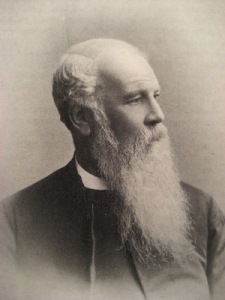
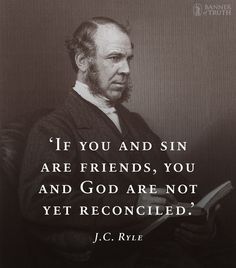
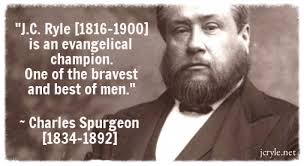
Today begins a seven part series on evangelism and thoughts from J C Ryle. Ryle came from a wealthy family who lost everything. He could have ventured a successful career in any occupation, and he chose to minister out of affection for God. Surviving the death of two spouses and marrying a third time, Ryle demonstrates the fortitude of finding our solace in God alone.
It is my hope that these daily posts will spur you on to sharing the gospel correctly and earnestly.
Part 1
Over the last several weeks I have been reading through J C Ryle’s book Holiness. I find it to be a great challenging book that stirs the soul. We need books like this for often we settle for comfortable platitudes. However, a disciple of the Lord need to be challenged and spurred on. The sanctification process that moulds us into the image of Christ is one of action, removing complacency. Thus God has given us J C Ryle.
Below I quote his criticisms and corrections for evangelism. These bear serious consideration. I have often found that current evangelism is much like a sales deal with a time share. The only difference is time share salesmen often take more time in presentation. Over the next few blog entries I hope to walk with you and the good Dr. Ryle in an analysis of evangelism as it should be. As it stands, please read and ponder the truths he shares.
The defects of the theological system I have in view appear to me to be these: (1) The work of the Holy Ghost in converting sinners is far too much narrowed and confined to one single way. Not all true converts are converted instantaneously, like Saul and the Philippian jailor. (2) Sinners are not sufficiently instructed about the holiness of God’s law, the depth of their sinfulness, and the real guilt of sin. To be incessantly telling a sinner to “come to Christ” is of little use, unless you tell him why he needs to come, and show him fully his sins. (3) Faith is not properly explained. In some cases people are taught that mere feeling is faith. In others they are taught that if they believe that Christ died for sinners they have faith! At this rate the very devils are believers! (4) The possession of inward joy and assurance is made essential to believing. Yet assurance is certainly not of the essence of saving faith. There may be faith when there is no assurance. To insist on all believers at once “rejoicing,” as soon as they believe, is most unsafe. Some, I am quite sure, will rejoice without believing, while others will believe who cannot at once rejoice. (5) Last, but not least, the sovereignty of God in saving sinners, and the absolute necessity of preventing grace, are far too much overlooked. Many talk as if conversions could be manufactured at man’s pleasure, and as if there were no such text as this, “It is not of him that willeth, nor of him that runneth, but of God that showeth mercy.” (Rom. ix. 16.)
On the other side, many graceless people are deluded into thinking they are “converted,” because under the pressure or animal excitement and temporary feelings they arc led to profess themselves Christians. And all this time the thoughtless and ungodly look on with contempt, and rind fresh reasons for neglecting religion altogether. The antidotes to the state of things I deplore are plain and few. (1) Let “all the counsel of God be taught” in Scriptural proportion; and let not two or three precious doctrines of the Gospel be allowed to overshadow all other truths. (2) Let repentance be taught fully as well as faith, and not thrust completely into the background. Our Lord Jesus Christ and St. Paul always taught both. (3) Let the variety of the Holy Ghost’s works be honestly stated and admitted; and while instantaneous conversion is pressed on men, let it not be taught as a necessity. (4) Let those who profess to have found immediate sensible peace be plainly warned to try themselves well, and to remember that feeling is not faith, and that “patient continuance in well-doing” is the great proof that faith is true. (John viii. 31.) (5) Let the great duty of “counting the cost” be constantly urged on all who are disposed to make a religious profession, and let them be honestly and fairly told that there is warfare as well as peace, a cross as well as a crown, in Christ’s service.
The clock read 3:23 am as he climbed into bed beside his wife. The agony of failure washed over Brent’s mind once again. Thoughts kept racing; “Why do I give into these temptations, why can’t I stop?” “If people know what a struggle I have they would abandon me, but how can I stop if I don’t get help?” “Am I even a Christian, where is the power of God in my life?”
Brent once again, after a long day, had slipped out of bed to check his email. This, as usual, led to his cruising about news sites that included racy humor. At this point he would take, “just a peek” at a porn site or two. Moments would turn to hours while his family slept a room away. It seemed that this was happening with greater frequency. He wanted to stop. But ever since puberty, pornography seemed to hold an allure for him that could not be broken. He loved Christ, served in the church, but this sin had a bondage that seemed impossible to break. He wanted desperately to be free.
As a father, pastor, and man, I am well aware of the relentless onslaught that pornography plays against the hearts and mind of men. Statistics abound, stories attest, and shattered lives all give credence to the fact that pornography and other sexual sins are a major weapon against godliness in our lives. I say in our lives to include both genders because statistically there is a strong rise in the number of women who are using porn. It is not just a male issue anymore.
Time and again I have read through Proverbs 7 and found wisdom, that when taken to heart and applied in today’s context, yields inexhaustible insight for battling temptations to indulge in pornography. Chapter seven gives insight as to how sexual temptation seeks its prey. In this chapter the man looking through his lattice spies a youth falling step by step into the seduction of an adulteress. In much the same way, people young and old fall to the lure of porn. The abyss of porn in the present day uses much of the same enticements, albeit under the improvisation of technology. By understanding the path to failure we can better prepare ourselves for the fight against adultery, porn, and immorality.
Pro 7:1-3 My son, keep my words and treasure up my commandments with you; keep my commandments and live; keep my teaching as the apple of your eye; bind them on your fingers; write them on the tablet of your heart.
The father is pleading with urgency that the son to take to heart wisdom for fleeing sexual traps. These words come from experience, wisdom, and knowledge of how time and again a person is ensnared. The father is implying that with great predictability the temptress uses enticing methods.
Thus, in everything the son touches, and even courses through his veins, he should take these profitable words to heart. Failure to do so ensures death.
Pro 7:4-5 Say to wisdom, “You are my sister,” and call insight your intimate friend, to keep you from the forbidden woman, from the adulteress with her smooth words.
All these words have a specific purpose, not just a generalization. What applied in the Old Testament time of writing applies even now. The tools used to lure victims are new, however, the practices of the game remain the same. The father warns that when allurement and enticement are dabbled with they will lead to rationalize the pleasure involved, dismiss consequences, and appeal to the pride of the fool. Given enough pressure from within he will turn and follow (James 1 is absolutely crucial to the fight). Corinthians 1:13 says that God will not give us more than we can bear, but contextually it also tells us that if we dabble in sin rather than turning to Him we choose to fail.
Pro 7:6-9 For at the window of my house I have looked out through my lattice, and I have seen among the simple, I have perceived among the youths, a young man lacking sense, passing along the street near her corner, taking the road to her house in the twilight, in the evening, at the time of night and darkness.
Life is difficult for young men that lack self-control. J C Ryle in Thoughts for Young Men has addressed this issue throughout the entire book. Young men are at a great disadvantage. They lack experience, they often are prideful because of their emerging abilities, their hormones lessen their resistance to sin, and they are born sinners. Even though there are disadvantages they are not an excuse. You are still responsible for your actions. Remember, we have little control over what happens to us, we do have a choice in how we respond.
There are some things to note here;
Even before the youth acts he demonstrates a lack of sense.
He is allowing himself to spend time in the proximity of this woman. He is not fleeing but toying with thoughts and ideas.
Notice the time in which this is occurring. It is evening at twilight. Factors of our vulnerability are heightened when it is the end of the day. We may be tired, hungry, agitated about a bad day, bored, or there may be a sense of needing a means of relaxation. Another factor to be wary of is that sometimes our most vulnerable times are when we have had success or have completed a major project, and even after a delightful day at church. Here, the young man is lurking about sin without a fear of what it can do.
Also to be noted, this is under the cover of darkness. It is a nearly hidden event. The internet, portable electronic devices all create this same type of opportunity.
Falling into the trap of porn needs three things; temptation, desire, and opportunity. The most opportune moment is when you wil least likely get caught, such as at night.
Pro 7:10 And behold, the woman meets him, dressed as a prostitute, wily of heart.
The woman has a plan and has dressed for it. Often temptation first appears through a visual means. When Jesus said “pluck out your eye if it causes you to sin,” He was not saying to do this literally. Even a blind man can lust sexually. What our Savior meant was to remove the possibilities and weaknesses to temptation. You won’t be able to remove all dangers but you should have a plan for when temptation arises.
Sin is powerful and crafty. I suggest reading C S Lewis’ The Screwtape Letters for some great insights here. But take every precaution. Set up internet filters, have someone for accountability, wear the armor of God (Ephesians 6).
Please realize, Satan knows how to entice a person. Lust can be an addictive trap. Sin is stronger that we are. Our only, and I do mean only help is Christ. We must abide in Him. We must not feed the temptations as this fool did by loitering around and rationalizing the possibilities. We must kill sin or it will be killing us.
Pro 7:11-12 She is loud and wayward; her feet do not stay at home; now in the street, now in the market, and at every corner she lies in wait.
Not just the porn industry, but immoral people in general are ever lurking and seeking ways to entice a victim. They plan, connive, manipulate all in an effort to get you under their power.
Her loudness points to an arrogance that defies others. Porn is enticing, it boasts that all is well, enjoy yourself, there are no consequences. Porn says that society places restrictions, that once removed would enlighten you to pleasures beyond your dreams. This is exactly what Satan Tempted Eve with. Porn, lust, and adultery are all one and the same; a sinful trap that denies the truth of God to say that you should be a god. Porn promises freedom and release, in reality it is enslavement.
Notice the availability of the adulteress. She is at every corner. She pursues him. There is no place safe, because the weakness is within your heart. It is your heart that must be guarded. The adulteress has an agenda of finding her victims wherever she may.
Pro 7:13-15 She seizes him and kisses him, and with bold face she says to him, “I had to offer sacrifices, and today I have paid my vows; so now I have come out to meet you, to seek you eagerly, and I have found you.
Porn lies by making much of you. It says you are special. It makes you out to be a super hero, all the while beckoning your pride and inner thoughts of entitlement. The adulteress says, “I have looked all over and none can satisfy, but now I see in you all that I have ever wanted. Give me just this one chance.” The lie here is that you are more than all others can see, and the adulteress alone recognizes this, she appeals to your selfishness. Porn simply tries to justify your participation. It lies about the consequences. It says, “just once,’ while the knowing the path of craving that will be created. We see this principle replicated by Jadis; offering Edmond Turkish Delight in The Lion, The Witch, and The Wardrobe. In the end, he would betray even family to gratify his lusts.
Pro 7:16-17 I have spread my couch with coverings, colored linens from Egyptian linen; I have perfumed my bed with myrrh, aloes, and cinnamon.
Sin looks good. It can be fun. It is candy coated evil. Sin never comes out and displays the consequences. It merely points out the immediate gratifications. Sin makes character look to hard to achieve, and unprofitable. Sin says, “Look at so and so, they are doing well, they sin all the time, it won’t cost you, you won’t get caught.” Sin has many whispering briberies. Satan’s tackle box has all the lures you would ever want to consume, all with a hook inside.
Sin discounts the wrath of God. It belittles His law and promotes a cheap grace. It says “you have nothing to lose.”
Just as this woman paints a soothing picture so does the porn industry. Know that those pictures and videos are fake. It is all a lie. The fun portrayed is all an illusion to attach itself to the lust of the eye. Videos are spliced together without showing the wrecked lives of the enticers. The photos are airbrushed, photo shopped, and embellished to promote an ideal experience.
The truth is some of the greatest lies are in adulterous pursuits. Have you ever read in the Bible and noticed that sexual sins tend to bring the greatest wrath? Have you realized that trading the grace of God for an idol is called adultery? This is idolatry. It seeks to substitute the glory of God for self-exalting pleasure.
Pro 7:18 Come, let us take our fill of love till morning; let us delight ourselves with love.
The adulteress again and again promotes thoughts of previously unattained satisfaction. It says, “This time will be the end all of all fantasies, one more time and it will enable you to walk away forever.” The adulteress is asking the age old question, “What is wrong with this?” Given enough thought, the young man will find all sorts of reasons to go with her. He will see the fun, the entitlement, the friendship she offers. Believing that she really cares about him and sees his value, his thoughts will turn from God to his ability to participate unscathed. The better question that should be asked is, “Does this glorify God?” Asking questions of ourselves in relation to the glory of God will enable us to say “Get the behind me Satan” to many invitations.
Notice it also calls this act “love.” With each enticement, porn pulls the participant away from God’s truth. Adultery equates sexual conquest with love. God equates love with a giving of oneself to another in a commitment for their betterment with the goal of doing everything to the glory of God.
Pro 7:19-20 For my husband is not at home; he has gone on a long journey; he took a bag of money with him; at full moon he will come home.”
In Old Testament times temptation would be in the form of outright adultery or even the extreme of temple prostitutes. Today it is simply magazines, internet, advertising, and videos on demand. Availability to engage in lust is at an all-time high of access and ease. In any situation, the risky taboo of enticement brings a sense of adventure with little repercussions. Worldly advice says, “If you don’t get caught then it is ok.” Remember, adultery is seen in the Old Testament as such an offence against God that He demands punishment by death by stoning.
Pro 7:21 With much seductive speech she persuades him; with her smooth talk she compels him.
The longer you dwell in temptation the further you will sink. It is a guarantee. The Bible reminds us, “Can a man stand near the fire and not smell of smoke?” One glance, one popup early in the day can come back to haunt a person several hours later. There is no such creature as an innocent look. You must create a battle plan to turn your heart back to God.
Pro 7:22-23 All at once he follows her, as an ox goes to the slaughter, or as a stag is caught fast till an arrow pierces its liver; as a bird rushes into a snare; he does not know that it will cost him his life.
This is just how it works, all at once, he gives in. The ledge gives way and he falls. How many times have you given in in a like manner? This young man reached a point of no turning back. Once this point is reached the slaughter is simply the finale. It always leads in death.
Never say, “I might as well do it, I can’t help it, I always fail anyway, what is the use, I have no hope.” These are lies. The Holy Spirit desires to break the cycle of sin.
Christ died on the cross to not only provide a way of salvation, but also a way of sanctification. A careful read of Romans seven and eight will help. Romans seven shows us the confusion that Paul felt in temptation. He did not do what he should and he did what he should not. But then, hope comes through Christ as we read in Romans eight. There he no longer walks by the flesh, he walks by the Spirit.
Pro 7:24 And now, O sons, listen to me, and be attentive to the words of my mouth.
The author of this passage again warns his son. Give your attention to truth. Trust the Father and keep far from all others. Know the Father’s love for the son for it is unquestionable. The father is pleading for the son to acknowledge the problem and plan a defense.
Pro 7:25-26 Let not your heart turn aside to her ways; do not stray into her paths, for many a victim has she laid low, and all her slain are a mighty throng.
Too many stronger man have fallen into this same snare. Do not be foolish thinking that you are any better. Be highly aware, that if you are not fighting to say on the path that follows Christ you too will be a victim. Sin is always seeking to entice us to ruin. Our following Christ can never take a day off. Without food a man can live for 30 days, without water 5 days, without Christ not even as long as his next breath. Walking with Jesus is more important that food or air. Without air you physically perish. Without Christ you eternally perish. This same urgency is applicable to our daily pursuit oh Him.
Pro 7:27 Her house is the way to Sheol, going down to the chambers of death.
So what is a man to do?
Not only must you be avoiding temptation, you must be replacing it with God centered living. You may need help. Your pastor is a great place to start, however, you may want to consider the discipleship a biblical counselor can bring. Biblical gospel centered help can be found free of charge by contacting a counselor from ACBC, the Association of Certified Biblical Counselors at https://biblicalcounseling.com/.
The Bible teaches us to put off the old self and to put on the new;
Weapon one is to confess your sin to God in repentance
Weapon two is to acknowledge your sin to another who will hold you in accountability.
Weapon three is to pluck out and cut off any and all opportunities for temptation to arise. This means radical efforts of purity. Covenanteyes.com provides a service of filtering and reporting to help you in your fight of faith.
Weapon four is to have a biblical defense plan. With the Bible, plan on what you are going to do when tempted. Also plan on what to do when you fail. Develop a plan for getting back on track. Each of these should have a component of confession, repentance, and God centeredness.
Weapon five is to plan to seek the scriptures, to pray and to be active in your church.
Weapon six is to memorize and apply the scriptures. A biblical counselor is indispensable here.
Weapon seven is to develop a biblical offense. Biblical defenses are used in a biblical offense. But here you seek to add to your life an ever increasing array of spiritual disciplines for holiness. You are to put off your old sinful ways and to continually put on greater refinements of abiding in Christ.
This is not a system. The only hope you have to defeat the habit or temptation of pornography and lust is to abide in Christ and achieve a true heart change.
Your greatest days are ahead. With each step away from sexual sin toward abiding in Christ you will find greater strength from Christ and joy despite circumstances.
Orb spider web; J Schmidt; 1977
Like Brent and many other men, and even women, if you need help, a biblical counselor can be found at https://biblicalcounseling.com/. These counselors offer help free of charge. Many are located in your local area. I also want to recommend reading; Closing the Window by Tim Chester, At the Alter of Sexual Idolatry, by Steve Gallagher, and a forthcoming book, Finally Free: Fighting for Purity with the Power of Grace, by Heath Lambert.
And he said to them, “Well did Isaiah prophesy of you hypocrites, as it is written, “‘This people honors me with their lips, but their heart is far from me. Mar 7:6
Now the context of this verse is that the Pharisees were teaching their traditions on par with the word of God. They were wrapped up in attempted worship of God, not in spirit or truth, but in self-regulating candor.
At a casual glance, this episode teaches me two things. First, doctrine does matter. Second, the heart matters just as much. Often we forget this. Jesus made this point explicitly clear when he instructed the woman at the well of Sychar, “But the hour is coming, and is now here, when the true worshipers will worship the Father in spirit and truth, for the Father is seeking such people to worship him.” (John 4:23)
In the past, I have regrettably leaned too heavily on doctrine, grazing at times in legalism. It becomes prudent to remember the grace of God as part and parcel to application of Truth from Scripture. The Pharisees were driven toward a form of holiness by doctrine, and we can learn from that, but they forgot grace. Doing so aborts the heart context of living out the gospel.
Grace is what takes Christianity from a mere religion of ethics to the glorious salvation that it is. It is never based upon our works, but upon the nature of Almighty God. If God has saved us, our hearts have been changed. Our new nature is to be ambassadors of that same grace. Christ changes the motives and passions of believers
These days, by this Scripture, I find myself looking at my heart. You see, we can be morally correct, as many of the Pharisees were. Yet, our heart can be so full of pride that we are not living for Christ but our own self-righteousness. We become more concerned with outward appearances and common standards that we fail to take Scripture to the point of sanctification. The danger is we can fall back to living so much on our own strength (the legalism of accomplishment) that we quickly forget the need to abide in Him. (Living by the Spirit, Romans 8) I believe we all need to be greatly concerned with where our heart affections lie when it comes to God.
Grace does not ignore doctrine, it embraces it. But, by the very nature of grace, one has affections of the heart for Christ, His church, and a lost world. If we are not a people of grace, we are not a people of Christ. Therefore, a battle rages, where is my heart?
As I look at my own life, I fear the failure to embrace grace. To go through the motions of the Sunday service unmoved, uninspired, and uncaring is a serious condemnation. When Jesus pointed out the departed heart of the Pharisees, he brought forth an indictment worthy of us all.
A heart that is set toward Christ is desperate and relieved all at the same time. We are desperate for Him to be pleased by our lives, desperate to abide in Him, and desperate to live by the Spirit, not the flesh. At the same time, we are relieved, for we know the grace of God is upon us, we embrace the promises of His word, and we have reason to have hope despite a fallen world. Together, these affections of the heart motivate us to abide in Him and make every aspect of living an act of doing all to the glory of God.
Thus, as Christians, our lives are Christ-centered because our heart is motivated by the work of the cross. As we live out our daily lives in ordinary experiences such as traffic, the trials of dealing with people, our own temptations to sin, and all the rigors of life, we are motivated to do all things for His glory, for our affections are upon Him, not the stuff of wood, hay, and stubble.
So please, think of it this way; Christianity is about a changed heart; not just grinding through a morality or set of beliefs regarding right and wrong. (2 Corinthians 5:17) It longs for a renewing of our mind. (Romans 12:2) Daily, we seek the putting off the old man and putting on the new, and it incorporates the sanctifying work of keeping works with repentance. Therefore, the key to all these standards is not the outward appearance, but the inner condition of the heart.
Let us therefore consider, as James 4 teaches, the raging war within our hearts. May we become steadfast to be satisfied in Jesus and place our worshipful affections upon Him. For what does it profit a man if he gains the whole world, and yet loses his soul.




 WesPinkley.com