J C Ryle and Evangelism part 5 of 7

93e9bad0a799d792b8891860e9b99cab


Part 5

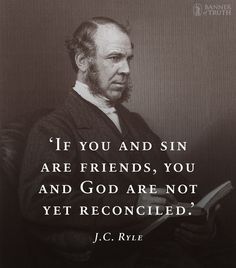
(5) Last, but not least, the sovereignty of God in saving sinners, and the absolute necessity of preventing grace, are far too much overlooked. Many talk as if conversions could be manufactured at man’s pleasure, and as if there were no such text as this, “It is not of him that willeth, nor of him that runneth, but of God that showeth mercy.” (Rom. ix. 16.)


This is a great truth.  Just the other day in a small group setting I encountered someone who is living with the struggle of sin keeping them from Christ.  They were under the guilt of sin.  So much so they had wrestled with the problem of sin that their unsaved condition led them to conclude that there is no point in trying to resist as they would only fail.  Mind you they are a pretty “good” person on our human standards, and not looking to justify themselves. I think those who have overcome much by way of  sanctification can identify with this issue. Many Christians do feel this way also.  We hear how we are to be obedient, moral, and holy.  Yet we fail again and again.  We hear often sermons on Three or ten things to do to live a certain way.  And herein lies the problem, too often we struggle with sin in our own strength.  We can’t keep God list of ten commandments let alone a sinful man’s perspective list.  What we need is the gospel!


My friend who is not under the direction of the Holy Spirit came to the logical humanistic conclusion of the problem. However, under the Holy Spirit we have a means of dealing with this.


As J C said, “but of God that showeth mercy”.  So often we try to rid ourselves of sin in order to be pleasing to God in our own strength.  What God desires, for His glory, is that we by faith take the promises confirmed by the cross and find our peach in them, not our own doings.  The natural man tries to “do something”.  The spiritual man sees what has been done already.  We grow up in a society that fends for itself.  God is glorified in what He has done, our job is to recognize it.  When we see God for who He is then in thankfulness we act accordingly.  (John 7:36-50)


We can not impress God.  We can not compensate for our sin.  The efforts to do so are sinful by presumption and taking another path to God, thus they themselves are sin.  Simply put the way to God is through Christ. (John 14:6)


So here the Gospel has power, it reveals our need for God, the provision of God, and the grace of God.  Anything less is man centered philosophy.


The gospel message removes in hope in ourselves.  It places all upon the back of Christ in the cross.  In our next installment we will continue with looking at Rev. Ryles Gospel centered evangelism.  We will see how it is evidenced and how it is not evidenced.
J C Ryle and Evangelism part 4 of 7

3496c98bd039637f6f8339330dcb7f82


Part 4


J C Ryle states…..

(4) The possession of inward joy and assurance is made essential to believing. Yet assurance is certainly not of the essence of saving faith. There may be faith when there is no assurance. To insist on all believers at once “rejoicing,” as soon as they believe, is most unsafe. Some, I am quite sure, will rejoice without believing, while others will believe who cannot at once rejoice.


“How do you feel”?  It is a question posed over and over to the newly converted.  Though well meaning it can have a cancerous effect.  To equate the salvation of a person with a feeling is most counter productive.  It alludes that our salvation is in proportion to our joy.  What about those days when you just don’t “feel like it”?  When problems arise and you are angry, agitated, nervous, stressed, or despondent, have you lost your salvation”?  The answer of course is no.


I can honestly remember dozens of times that “sales pitch” evangelism has been made only to follow a commitment prayer with “How do you feel”?  It has even happened to me.  I praise God for 1 John.  Lately as I reread this great book I am reminded that with great compassion John writes to remind us of where our assurances lie.  They reside within the working of the Holy Spirit abiding within us.


Now do not get me wrong.  Emotions are highly important, especially joy.  Remember, we were created to glorify God and enjoy Him forever.  How can we enjoy someone and glorify them without joy in them?


When Jesus spoke to the woman at the well He made a profound truth known, “God seeks worshippers who will worship Him in spirit and in truth”.  The truth is the doctrines, the correct theology, and adherence to the word of God.  The spirit is that joy and treasuring, that love for God that glorifies Him above all the entrapments of the world or pleasures of sin.  Thus as Ryle states, it is essential to have joy.  A worshipper without inward joy is a fake, or at best confused.  I often tell our people to wake up every day and realize that their greatest need has been met in Christ upon the cross.  With that perspective we ought ot have overcoming joy in our trials, we ought to be worshipping in whatever we do, and unto the glory of God.


As C S Lewis states, “Joy is not complete till expressed”.  Thus, to be a worshipper means that joy from within is then poured forth.  Out of the heart the mouth speaks.  Let the joy of the Lord be the strength to worship, and do so based upon His truths.  True worship is an upward spiral.  Truth brings joy which brings a deeper understanding of truth that brings more joy.  Praise God that we were created to be worshippers in spirit and in truth.


Let us return to the topic of assurance.  Ryle notes that assurance is not necessarily saving faith.  You can believe something and be wrong.  Columbus believed he had made the voyage to India.  Doctors once believed that by bleeding patients they would save them.  We need to believe and find assurances in Christ.  We grow in this by discipleship.    And yet, you can truly believe and not have assurance.  I think of the father who came to Christ after the disciples could not help his son.  He cried to Jesus “I believe, help my unbelief”.  We are told that if we have faith like a mustard seed we can be saved.  Remember, new Christians are often marked by a lack of knowledge, which is born through experience with Christ.


We all have moments when we lack assurance.  These can be most beneficial.  That is to say we do need to question our salvation. Are we trusting in ourselves or totally in Christ?  We need to look at motives, experiences, and at the moment of commitment  were our emotions getting the best of us.  Then we need to call again upon Christ.  Beg for His presence and saving work.  We need to see our need of Him and treasure Him, thus making it certain to “work out our salvation with fear and trembling”.  Questioning my salvation at times has served to further reveal my need for Him and to wane my self reliance.  This moves us from making salvation a moment in time experience (the get out of Hell Free Card) to a changed life experience.


Truly, we can not ascertain in the experiential moment if someone is truly saved.


The solution is time abiding in Christ.  Just like 1 John reveals as well as the parable of the seed and sewer.  Those who abide, last, and bear fruit can be then assured of their salvation.

J C Ryle and Evangelism part 3 of 7

jc_ryle5


Part 3

Our third installment of Evangelism via J C Ryle


(3) Faith is not properly explained. In some cases people are taught that mere feeling is faith. In others they are taught that if they believe that Christ died for sinners they have faith! At this rate the very devils are believers!


Just last night my eight year old daughter came to faith in Christ.  I am trilled that the quiver of arrows God has entrusted me with is now complete in Christ.  As she was sharing her decision with me I wanted to restrict my emotions for the very reason Dr. Ryle addresses above.  I do not want her thinking that Christianity is an emotion state of being.


Ryle is spot on.  Too often methods of sharing your faith are too simplistic.  What we are saying her is that faith is often reduced to a feeling.  It is also legalistically explained as blunt thoughtless confession as a magical mantra that qualifies as good enough to gain you an inheritance in Christ’s blood.  This simply is not true.  As Jesus said it is like the Pharisees making someone twice as much a child of hell.  It give a false assurance.  Better the Christian who doubts his/her salvation than the lost sinner who has false assurance.  But better still is that complete Christian who strives for an authentic living of the faith.


Ryle mentions as James does that the devils believe, and they shudder.  The demons believe with greater faith that Christ is the savior, that He is Lord.  But He is not their love.


As I listened to my daughter last night I had her explain to me what she meant.  We often talk of Savior, Lord, and Love being three concrete identifiable factors of being a truly converted sinner.  I have written on these before in this blog.  A search within its contents will find it.  To be a Christian requites an acknowledgement of sin, the need of Christ as Lord, and we must love Him.  We cannot love Jesus “and”.  It is to be Jesus alone.


My great problem with sales stylized evangelistic programs is that too little is either spent on the conviction and repentance of sin and also the place of love for God that is at the heart of Christianity.  Mind you an eight year old girl is not going to have a theology degree.  But what we can look for is the workings of the holy Spirit.    The majority of evangelistic methods I have seen are mere sales pitches.  Everybody basically desires a “get out of Hell free” card much like life caricatures a Monopoly game.  We simply must not do this.


God can save someone in an instant.  Often He puts the right person with the right other person and one of these methods does work.  However, I can drive a nail with a rock, but a hammer is much better.  One reason I base my conclusions upon is how few people remain in discipleship within a year later making such a decision.  Many fall away just as Christ shared in the seed and the sewer example.  Yes they receive the word, but being rootless they wither quickly.


So what should proper evangelism contain?  Check the following entries as we continue to learn from Dr. Ryle.


FYI

Jonathan Edwards wrote a great book The Religious Affections.  In it he debates and clarifies the need and purposes of emotions in worship and faith.  Though it is a higher level read it is one of those books that every Christian ought to read and apply.  If you have ever “not felt like a Christian” or had an emotional experience where a great commitment that now has gone by the wayside this book will give profitable insight.  In short, it also condemns the fanatical means of “prosperity gospel”.

J C Ryle and Evangelism part 2 of 7


spurgeon-ryle

Part Two.

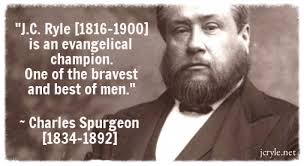
One thing to note is when this was written.  John Charles Ryle lived from 1816 to 1900.  Our considered work was published in 1879.  This was about the time that Charles Finney was transforming the way we did church.  Finny was the one whom is credited with “The alter call”.  Now I am no expert on Finney, but what I have learned is that he utilized showmanship and emotional theatrics to gain converts.  Numbers are what mattered.  Thus today we see many of the same devices employed for the appearance of the activity of God.


Let me go on record to say that I am not dismissing the alter call, just critiquing it.  I believe that an alter call may have its place.  But what is rather to be preferred is the puritan means of “Inquirery”.  Inquirery was an extensive visit of the minister to the home of the parishioner.  Here the minister would have scheduled time, often two hours or more, to inquire of the spiritual condition of the home and to allow the members of the home to ask direct pointed questions.  It was not rushed.  It also revealed the consummate nature of spiritual urgency.  A minister was afforded the time to ask pointed and specific questions.  Typical Sunday school answers would not suffice.  Thus the result was often either the making of true disciples or clearly leaving the unconverted with an unquestionable understanding of how the scriptures applied to their condition.  Thus my critique of Finney is that he closed the deal quickly and the seed of the word that was sewn was upon the rocky soil at best.


That being said, let us turn again to what Ryle teaches of evangelism.

The defects of the theological system I have in view appear to me to be these: (1) The work of the Holy Ghost in converting sinners is far too much narrowed and confined to one single way. Not all true converts are converted instantaneously, like Saul and the Philippian jailor.


I would agree.  Many people it seems come to Christ in a gradual progression.  In our church we have a woman who can not point to a single moment when she can say was definitive.  She simply says that she knows the Truth that sets her free.


(2) Sinners are not sufficiently instructed about the holiness of God’s law, the depth of their sinfulness, and the real guilt of sin. To be incessantly telling a sinner to “come to Christ” is of little use, unless you tell him why he needs to come, and show him fully his sins.


Here is my largest agreement with Ryle.  When I “was led to Christ” as a young child it was a quick sale.  I did not understand about holiness to any degree.  I just wanted a “get out of Hell free card”.  I then went about with a notion that I was saved, could not lose my salvations, and could freely sin.   I had no idea of the real guilt of my sin, and thus no real understanding of the glory of Christ or the cross.  I was nearly through seminary before making this discovery.  It also wasn’t until years later that I even went to a greater depth in this understanding.   I have missed out on so much worship and knowledge of God, sinned aggressively, all because of a liberal doctrine of sin and holiness.  Too often I saw God loving me because I was loveable, after all He died for me right?  I did not understand that He died for me based on whom He is , no on whom I am.


We must make this clear.  We need to know our sin.


Let us look at it this way, by helping the sinner to see their sin it causes them to recognize the discrepancy between themselves and the holiness of God.  Thus then they see the value of being saved.  In America today we fail to see our depravity because “we are rich and have no need”.   We give little regard to God because we find “fulfillment” in self esteem and its antecedents.  If there were any area I would personally love to have developed within me it would be the understanding of my sin and His holiness.  For too long I did not have this taught to me.  Thus my years of “being a Christian” were characterized by creating theological dodges of responsibility or culpability with ever sermon I heard or dilemma that I came to.  But when we have no recourse in the sight of His holiness we become like Isaiah crying “Woe is me”.

J C Ryle and Evangelism

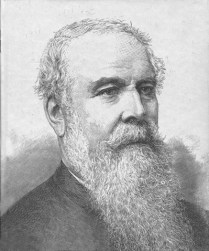
Today begins a seven part series on evangelism and thoughts from J C Ryle.  Ryle came from a wealthy family who lost everything.  He could have ventured a successful career in any occupation, and he chose to minister out of affection for God. Surviving the death of two spouses and marrying a third time, Ryle demonstrates the fortitude of finding our solace in God alone.

It is my hope that these daily posts will spur you on to sharing the gospel correctly and earnestly.

Part 1rylelibrary

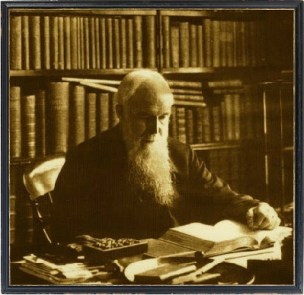
Over the last several weeks I have been reading through J C Ryle’s book Holiness.    I find it to be a great challenging book that stirs the soul.  We need books like this for often we settle for comfortable platitudes.  However, a disciple of the Lord need to be challenged and spurred on.  The sanctification process that moulds us into the image of Christ is one of action, removing complacency.  Thus God has given us J C Ryle.


Below I quote his criticisms and corrections for evangelism.  These bear serious consideration.  I have often found that current evangelism is much like a sales deal with a time share.  The only difference is time share salesmen often take more time in presentation.  Over the next few blog entries I hope to walk with you and the good Dr. Ryle in an analysis of evangelism as it should be.  As it stands, please read and ponder the truths he shares.


The defects of the theological system I have in view appear to me to be these: (1) The work of the Holy Ghost in converting sinners is far too much narrowed and confined to one single way. Not all true converts are converted instantaneously, like Saul and the Philippian jailor. (2) Sinners are not sufficiently instructed about the holiness of God’s law, the depth of their sinfulness, and the real guilt of sin. To be incessantly telling a sinner to “come to Christ” is of little use, unless you tell him why he needs to come, and show him fully his sins. (3) Faith is not properly explained. In some cases people are taught that mere feeling is faith. In others they are taught that if they believe that Christ died for sinners they have faith! At this rate the very devils are believers! (4) The possession of inward joy and assurance is made essential to believing. Yet assurance is certainly not of the essence of saving faith. There may be faith when there is no assurance. To insist on all believers at once “rejoicing,” as soon as they believe, is most unsafe. Some, I am quite sure, will rejoice without believing, while others will believe who cannot at once rejoice. (5) Last, but not least, the sovereignty of God in saving sinners, and the absolute necessity of preventing grace, are far too much overlooked. Many talk as if conversions could be manufactured at man’s pleasure, and as if there were no such text as this, “It is not of him that willeth, nor of him that runneth, but of God that showeth mercy.” (Rom. ix. 16.)


On the other side, many graceless people are deluded into thinking they are “converted,” because under the pressure or animal excitement and temporary feelings they arc led to profess themselves Christians. And all this time the thoughtless and ungodly look on with contempt, and rind fresh reasons for neglecting religion altogether. The antidotes to the state of things I deplore are plain and few. (1) Let “all the counsel of God be taught” in Scriptural proportion; and let not two or three precious doctrines of the Gospel be allowed to overshadow all other truths. (2) Let repentance be taught fully as well as faith, and not thrust completely into the background. Our Lord Jesus Christ and St. Paul always taught both. (3) Let the variety of the Holy Ghost’s works be honestly stated and admitted; and while instantaneous conversion is pressed on men, let it not be taught as a necessity. (4) Let those who profess to have found immediate sensible peace be plainly warned to try themselves well, and to remember that feeling is not faith, and that “patient continuance in well-doing” is the great proof that faith is true. (John viii. 31.) (5) Let the great duty of “counting the cost” be constantly urged on all who are disposed to make a religious profession, and let them be honestly and fairly told that there is warfare as well as peace, a cross as well as a crown, in Christ’s service.


A Few Thoughts on Cussing

(This is a requested reprint of a previous blog article.)

While shopping in the Christmas season I have encountered people with heightened emotions.  Distracted and aggressive drivers are causing problems on the road.  Aggravated shoppers more fastidiously claim their spot in the aisle, and bristle.  Others greet one another more joyously, and tune in with the music being played.

One particular fellow I encountered stood out.  While shopping in Lowe’s he began a dialog with a salesman who was helping me.  I truly believe if I kept count, at least ten percent of his words fell into the swearing category.  One in ten.  Ten for every one hundred.  A full six minutes of blatant expression every hour.  I walked away wondering why he even cussed at all?  His over use of emotive words has me pondering.  Thus, I have come up with a list of reasons not to cuss.

Swearing reveals your hard heart.   It says that you can be difficult to deal with.

When expressing oneself with such language, others may simply write you off as being an exaggerating pessimist.

Vulgarity offends and reveals that you have little consideration of others. It reduces the communication to being all about you.

It diminishes your ability to express anything that truly deserves exclamation.  It is akin to an e-mail in all caps.

Swearing does not gain any sympathy for your situation nor does such elevate you to a position that we should awe or respect.

Cussing simply shows a lack of being able to convey the emotions you have in an educated manner.  It makes the swearer seem reactive rather than insightful.

The use of such language does not solve any problem.  It may, in-fact, compound the situation.  It also wastes time.  People who are problem solvers will fail to ascribe a value to your opinions, thus it removes you from the group of solution oriented people.

From a God-centered point of view, it is a blasphemous decree against the sovereignty and plan of God.  It fails to recognize His goodness and lacks faith to trust in Him to work good from the situation.  It is an affront to His ways, purposes, and joy.

I am sure this list will promote two things.: create thoughts of reform on the subject in our own lives, or incite more cussing.   Emails will surely follow, some attempting to push the envelope of toleration.  But regardless, our words reveal our hearts.  What do we want others seeing within us?